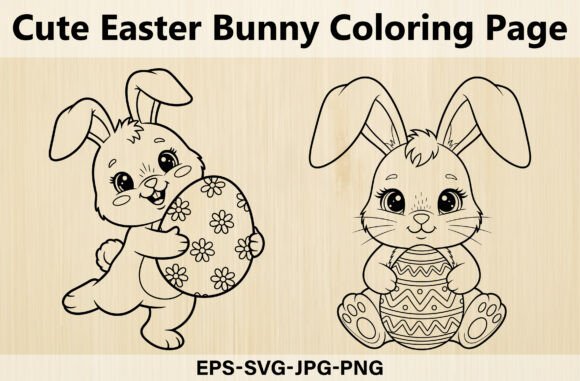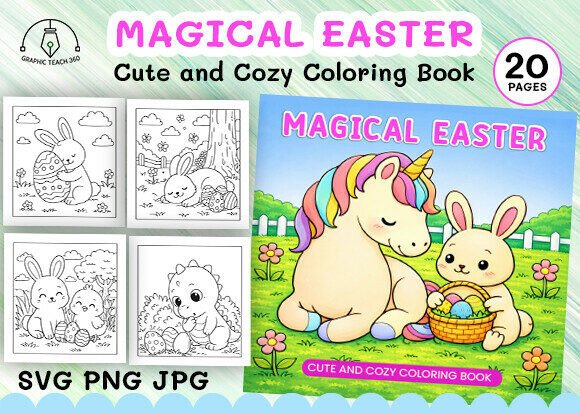
Magical Easter Cozy Cute Coloring Book
A Designer’s First Glance: Sweet, Simple, and Stitch-Ready
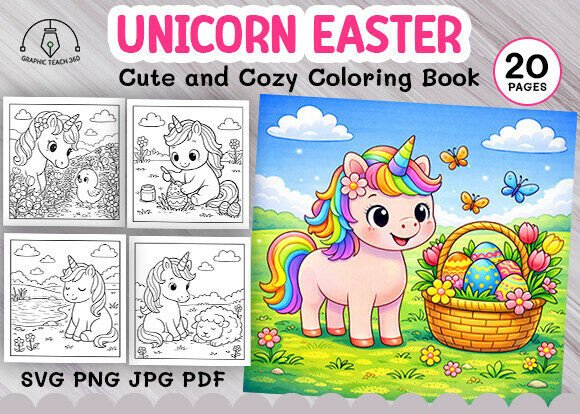
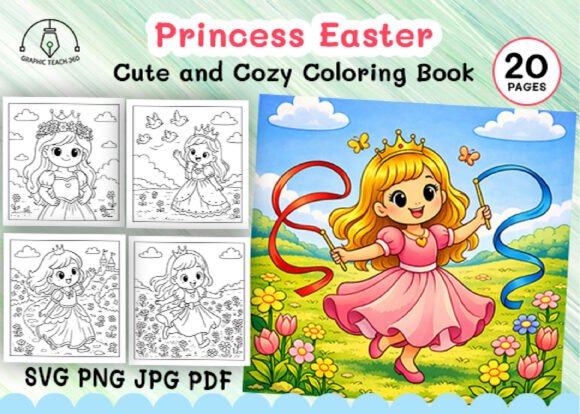
When I opened Magical Easter Cozy Cute Coloring Book, my first thought wasn’t “cute”—it was “clear.” The line art is intentionally unfussy: soft curves, open shapes, gentle spacing between elements, and no micro-details that would vanish under thread. As a designer who’s stitched dozens of Easter-themed projects—from baby onesies to boutique tea towels—I immediately saw how this set bridges coloring-page charm with embroidery practicality. It doesn’t scream “busy holiday,” but hums with quiet warmth—bunnies in tiny hats, eggs cradled like nests, lambs curled mid-dream. That tone matters: it translates directly into a finished embroidered product that feels handmade, not mass-produced.
Real Project Test: A Custom Embroidered Tote for a Local Kids’ Boutique
Last week, I prepped a small-batch run of canvas tote bags for a neighborhood children’s shop—each one personalized with a single Easter motif from the collection. I chose the “Carrot-Carrying Bunny” page. Why? Its silhouette is bold enough to read at 3.5 inches tall, its outline has generous negative space (no risk of fill stitches bleeding), and the carrot’s tapered shape avoids tight corners where thread can pucker or jump. On medium-weight canvas with tear-away stabilizer, it stitched cleanly in under 90 seconds using a satin stitch border and light fill. Customers loved the softness—not just of the fabric, but of the design’s personality. One mom told me her daughter “recognized it before she even saw the word ‘Easter.’” That’s the power of intentional simplicity.
Where This Design Shines—and Where It Needs Careful Handling
Magical Easter Cozy Cute Coloring Book thrives on products where clarity and charm carry the message:
- Custom apparel: Works beautifully on sweatshirts and relaxed-fit tees—especially when scaled to 4–5 inches wide. The friendly line weight holds up without looking thin or fragile.
- Baby embroidery: Ideal for onesies and burp cloths. No fine linework means no skipped stitches on lightweight interlock or jersey.
- Patches & aprons: Clean outlines translate reliably into sew-on patches or kitchen aprons—no dense fill areas to stiffen the fabric.
- Holiday gifts & nursery decor: The whimsy reads as thoughtful, not childish. Perfect for embroidered pillow covers or framed hoop art meant to hang year after year.
But let’s be real—some applications need extra attention:
- Small hoop sizes (under 3 inches): Avoid motifs with nested details (like the “Mushroom Circle” page) unless simplified. Tiny stems or overlapping caps may not resolve cleanly.
- Textured or stretchy fabrics: Linen napkins or ribbed knit caps require testing. Gentle curves hold up well, but avoid placing designs over seams or high-movement zones like elbow joints.
- Dark fabric backgrounds: Since these are line-art-based graphics, contrast depends entirely on your thread choice. Always test black, cream, and pastel threads side-by-side on your base fabric.
- Frequent-wash items: While the shapes are forgiving, avoid heavy satin-stitch borders on toddler towels—opt instead for running-stitch outlines paired with minimal fill.
What It Adds to Your Craft Business—Beyond the Stitch
As an Etsy seller and small shop owner myself, I judge design assets not just by stitch count—but by how they elevate perception. Magical Easter Cozy Cute Coloring Book strengthens customer trust because it looks *designed*, not assembled. When you offer a personalized embroidered sweatshirt with one of these motifs, buyers don’t see “clip art”—they see intention. That lifts perceived value, supports premium pricing, and encourages repeat orders (“Do you have the chick with the flower crown?”). It also pairs naturally with printable mockups for your listings—soft shadows, subtle texture overlays, and clean white backgrounds make digital previews feel cohesive and professional.
For commercial embroidery shops, this set reduces client revision cycles. The consistent line weight and balanced composition mean fewer “can you make the ears bigger?” requests. And for craft fair sellers? These motifs scale gracefully from 2-inch iron-on patches to 8-inch pillow centerpieces—giving you flexibility without redesigning.
Practical Designer Notes Before You Stitch
Before turning any page from Magical Easter Cozy Cute Coloring Book into a machine embroidery design:
- Test on scrap fabric first—especially if using textured weaves or blends.
- Check thread color contrast against both light and dark backgrounds. Pastel threads pop on navy; charcoal works surprisingly well on oatmeal linen.
- Review stitch density. If converting manually, keep fill areas open—dense stitching fights the cozy, hand-drawn mood.
- Confirm hoop size compatibility. Most motifs fit comfortably in a 4x4 hoop at standard scale—but always preview digitally before hooping.
- Inspect small details: eyes, whiskers, flower centers. If they’re thinner than 1.5mm in your vector file, simplify or omit them.
- Test black-and-white mockups to verify readability—this is especially helpful for social media thumbnails and Etsy listing visuals.
- Use appropriate stabilizer: medium tear-away for stable wovens, cut-away for knits or baby items.
- Verify licensing before selling finished embroidered goods or reselling digitized versions. Since this falls under Coloring Pages Amp and is categorized as Graphics, confirm whether commercial use is permitted for your intended application.
Final Thought: Not Just Easter—It’s Emotional Utility
What makes Magical Easter Cozy Cute Coloring Book more than seasonal decoration is its emotional utility. It delivers comfort through shape, familiarity through theme, and versatility through restraint. Whether you’re embroidering a last-minute teacher gift or building a spring-themed product line for your craft business, this set doesn’t ask you to work around it—it invites you to build *with* it. And in the world of handmade product creation, that kind of quiet reliability is rare, valuable, and deeply professional.