Kitty Cat Coloring Book Pages: Graphics for Crafts Projects
As a graphic designer who’s built brand identities for handmade businesses, developed print-on-demand product lines, and crafted social media graphics for Etsy sellers, I recently evaluated Kitty Cat Coloring Book Pages for a real client project: a spring-themed boutique launch for a local cat café and artisan gift shop. The goal? Create cohesive, warm, and playful visual assets — from packaging stickers to Instagram story templates and printable wall art for in-store displays. Here’s my honest, field-tested review.
A First Impression That Feels Hand-Crafted, Not Generic
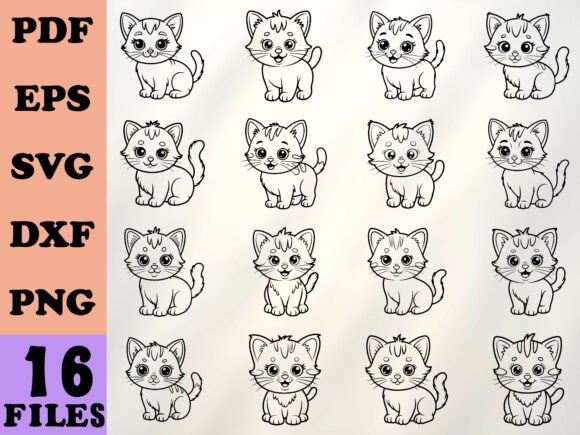
Opening the files, I was immediately struck by how consistently Kitty Cat Coloring Book Pages balances simplicity with charm. These aren’t hyper-detailed illustrations — they’re clean-lined, confident outlines with intentional negative space, subtle curvature, and gentle asymmetry that reads as hand-drawn but executes like precision vector work. The mood is lighthearted, nostalgic, and approachable — ideal for small business branding that wants warmth over polish, authenticity over sterility.
Where It Shines in Real Client Work
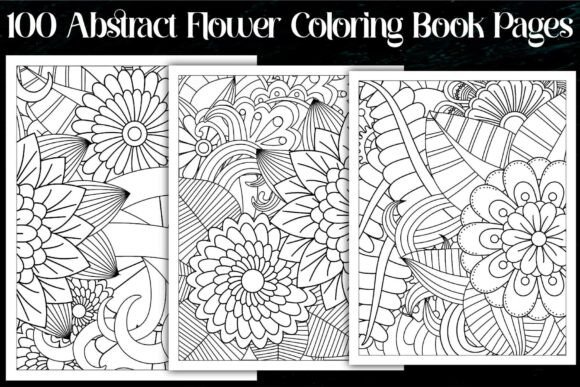
In our café launch, we used Kitty Cat Coloring Book Pages across multiple touchpoints — and it held up remarkably well. As a graphic design asset, it performed strongest in:
- Printable design: Perfect for themed coloring sheets included with purchase — tested at 8.5×11" and A4 with crisp SVG-to-PDF export; no pixelation or jagged edges.
- Cricut project and sublimation design: The DXF and SVG files imported cleanly into Design Space and Cricut Access workflows. Cut lines were accurate, and the open paths allowed easy layering for multi-color vinyl projects.
- Packaging design: We placed simplified cat silhouettes as corner accents on kraft paper gift tags and tote bag mockups — their organic line weight added texture without competing with typography.
- Social media graphics: Used as central motifs in Canva templates for Instagram posts and Pinterest pins. Paired with soft pastel backgrounds and rounded sans-serif fonts (like Quicksand or Nunito), the contrast felt inviting and on-brand.
- Product mockup integration: Applied to mug and ceramic coaster templates — the line art translated beautifully to curved surfaces without distortion.
It also worked well as a supporting element in editorial design (blog headers for pet-care content) and sticker design (die-cut vinyl for loyalty cards). Its versatility across digital product, printable design, and commercial design makes it unusually flexible for one design bundle.
Where Caution Is Needed — Not Every Project Fits
This isn’t a universal asset. In our early tests, we discovered limitations worth flagging for fellow designers:
- Small sizes: Below 1.5 inches wide, fine details (like whiskers or paw pads) vanish — avoid using full compositions for favicon-sized icons or tiny app UI elements.
- Crowded layouts: When layered over busy photo backgrounds or dense patterned textures, the outlines lost definition. Best paired with solid-color or very low-contrast backdrops.
- Minimalist branding: For clients prioritizing ultra-clean, corporate, or Scandinavian aesthetics, these cats feel too expressive — they introduce warmth but sacrifice austerity.
- Professional corporate materials: Not suited for law firms, financial advisors, or B2B SaaS — the emotional tone is deliberately friendly and informal.
How It Shapes Visual Hierarchy & Brand Trust
Kitty Cat Coloring Book Pages doesn’t dominate — it invites. That’s its strength. In logo design exploration, it didn’t serve as a primary mark, but made an excellent secondary icon or brand pattern when repeated subtly. It boosted emotional appeal without undermining professionalism, especially for audience segments that value handmade charm — think Etsy shoppers, indie bookstore patrons, or local event attendees.
We tested readability alongside three font families: a clean sans-serif (Inter), a delicate script (Dancing Script), and a bold display font (Bebas Neue). The cats harmonized best with rounded sans-serifs and light scripts — reinforcing playfulness without sacrificing clarity. With serif fonts like Merriweather, the contrast felt jarring unless carefully balanced with generous spacing.
Designer Notes You Can’t Skip Before Use
Before dropping Kitty Cat Coloring Book Pages into a client file, here’s what I verified — and recommend you do too:
- Test in black-and-white: Confirmed all outlines remain legible at 100% grayscale — critical for print consistency.
- Check contrast on light and dark backgrounds: PNG files include transparent backgrounds (verified via alpha channel inspection), but always preview on both white and charcoal mockups.
- Preview at scale: Zoom out to 25% to assess layout balance; zoom in to 300% to inspect anchor points and path smoothness in EPS/SVG.
- Place on real mockups: Used it on actual tote bag and sticker sheet proofs — no rendering issues in Adobe Illustrator or Affinity Designer.
- Test print quality: Ran a sample batch on uncoated matte paper — ink spread was minimal, lines stayed sharp.
- Review file formats: EPS is editable in legacy workflows; SVG handles responsive web use; DXF ensures Cricut/Silhouette compatibility; high-res PNGs (300 DPI) support print-on-demand platforms.
- Confirm commercial licensing: The description states “Created Without Copyright Constraint” — interpreted as royalty-free for commercial use, including resale in digital products and physical goods. Still, verify usage scope with your client’s legal team if scaling nationally or internationally.
For crafters, Cricut users, bloggers launching themed content series, or print-on-demand sellers building seasonal collections, Kitty Cat Coloring Book Pages delivers reliable, mood-aligned design assets. It’s not groundbreaking innovation — but in the world of small business branding, reliability, flexibility, and emotional resonance often matter more than novelty. When your client needs graphics that feel human, joyful, and ready to ship — this is one creative design asset worth keeping in your working toolkit.