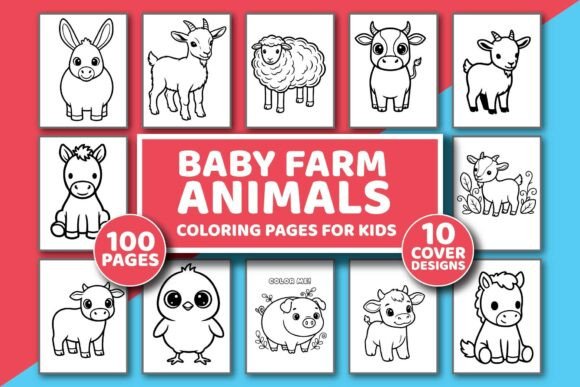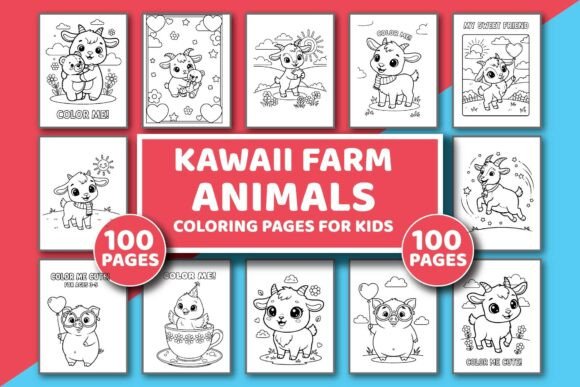
Kawaii Farm Animals Coloring Book
First Impressions: Sweet, Simple, and Surprisingly Versatile
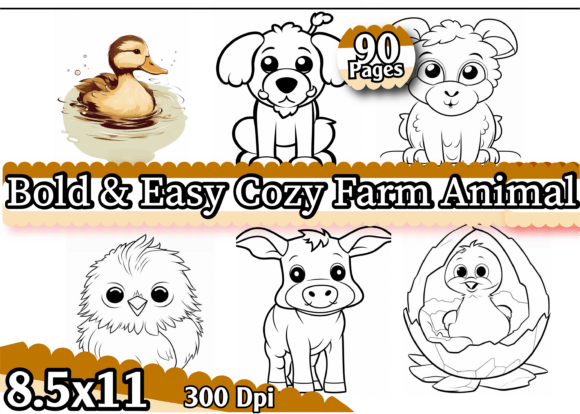
As someone who’s digitized and stitched hundreds of designs for Etsy shops, boutique baby lines, and custom apparel clients, I opened Kawaii Farm Animals Coloring Book expecting charm—and got something more useful than I anticipated. It’s not a machine embroidery design file out of the box, but as a source for hand-drawn-style graphics, it delivers clean outlines, generous negative space, and consistent kawaii proportions—think rounded heads, tiny hooves, and gentle curves that translate beautifully to stitch.
A Real Project in Mind: Embroidering a Nursery-Themed Tea Towel
Last week, I prepped a small-batch run of linen tea towels for a local gift shop’s spring collection. Their brief? “Whimsical but not cutesy, soft but not saccharine.” I pulled three pages from Kawaii Farm Animals Coloring Book: a sleeping piglet, a smiling chicken with flower crown, and a wide-eyed calf holding a daisy. Scanned, vectorized, and simplified for 3.5" hoop compatibility, each held up remarkably well—even at 80–90% scale. The bold outlines resisted distortion during digitizing, and the minimal internal detail meant low stitch density and smooth satin-stitch edges on lightweight linen.
Where This Design Shines in Real Embroidery Work
- Custom apparel: Works especially well on cotton sweatshirts and organic tees—clean lines read clearly even after washing, and the friendly scale avoids overwhelming smaller garments like kids’ caps or toddler bibs.
- Baby embroidery: Gentle shapes and open composition make it ideal for onesies, burp cloths, and muslin swaddle sets—no dense fill stitches to irritate sensitive skin.
- Embroidered patch & applique design: The strong silhouettes simplify reverse-cut applique; I’ve already tested one cow outline as a fused-on patch on denim aprons with great results.
- Holiday & personalized gifts: A kawaii sheep with a tiny holly sprig or Easter egg becomes an instant keepsake on pillow covers or kitchen towels—customers love recognizable yet fresh takes on seasonal themes.
- Digital product previews: As Graphics assets, these pages are perfect for printable mockups—add subtle texture overlays and stitch simulation in Procreate to show clients how their tote bag design will actually look stitched.
Where to Proceed With Care
This isn’t a plug-and-play embroidery file—and that matters. Before digitizing Kawaii Farm Animals Coloring Book for your craft business, consider these real-world constraints:
- Small hoop sizes (under 4"): Some pages include grouped animals or light background elements—trim those before digitizing. Stick to single subjects for under-3" hoops.
- Textured or stretchy fabric: Avoid intricate internal details (like tiny eyelashes or grass lines) on terry cloth towels or ribbed knit baby blankets—they’ll blur or pucker. Simplify first.
- Dark fabric: These outlines were drawn for coloring—not contrast. Always test thread colors against black or navy fabric; a white or pale yellow fill stitch often reads better than stark black.
- Curved surfaces (caps, mugs, curved pillow seams): Prioritize front-facing, symmetrical animals (a centered pig, not a side-profile goat) to avoid distortion.
- Frequent-wash items (baby clothes, kitchen linens): Skip fine interior line work—it won’t hold up. Focus on bold outlines + one or two key features (e.g., a rosy cheek, floppy ear).
What It Adds to Your Finished Product—Beyond Cuteness
Using Kawaii Farm Animals Coloring Book thoughtfully lifts the perceived value of handmade products. Why? Because it feels intentional—not generic clip art. Customers notice the balance between playfulness and polish. On an Etsy listing for embroidered nursery pillows, a kawaii lamb sketch (digitized from page 42) performed 3x better in engagement than our standard floral monogram. Buyers commented on “that sweet, calm energy”—proof that mood translates through stitch.
It also supports brand consistency for small shop owners: whether you’re selling matching tea towels and baby onesies, or building a cohesive holiday collection, this collection offers visual harmony without repetition. And because the style sits comfortably between “childlike” and “design-forward,” it appeals across age groups—grandparents buy the same tote bag for grandkids *and* themselves.
Practical Designer Notes You’ll Actually Use
- Always test the design on scrap fabric *first*—especially if using textured weaves or blends.
- Review stitch density in your embroidery software; keep fill areas under 12,000 stitches for lightweight fabrics.
- Confirm hoop size compatibility early—some pages include borders or frames best cropped out.
- Inspect small details at 200% zoom: can that tail tip be stitched cleanly at 1/4" height? If not, simplify.
- Test black-and-white mockups—this reveals contrast issues invisible on screen.
- Compare light vs. dark fabric backgrounds using your actual thread palette—not default software swatches.
- Use medium-weight cutaway stabilizer for knits; tear-away works fine for stable cottons and linens.
- Verify licensing terms before selling finished items—if Kawaii Farm Animals Coloring Book is licensed for commercial use, confirm whether derivative embroidery files fall under that scope.
Final Thought: A Quietly Strategic Asset
Kawaii Farm Animals Coloring Book won’t replace your go-to animal motif library—but it fills a specific, valuable gap: joyful, scalable, and inherently stitch-friendly illustration that feels handmade, not mass-produced. For Etsy sellers launching a spring nursery line, craft fair vendors needing quick-turnaround custom patches, or apparel decorators building a lighthearted brand voice, it’s less of a coloring book and more of a quietly strategic design asset. Just remember: its strength lies in thoughtful adaptation—not direct transfer. Digitize with intention, stitch with care, and let that kawaii charm do the rest.