Heron Bird Line Art Coloring Page SVG
A Clean, Calm Silhouette—Not Just for Coloring
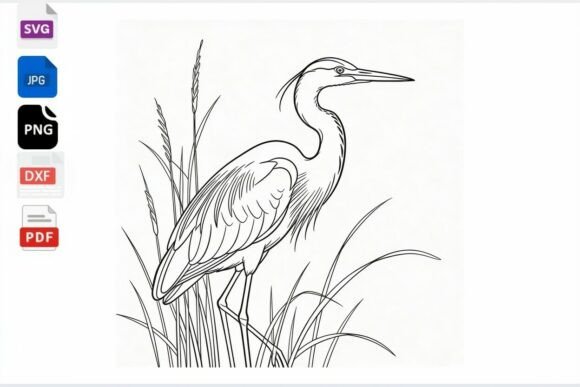
First impression? This Heron Bird Line Art Coloring Page SVG feels like a quiet breath—elegant, unhurried, and unmistakably intentional. The line work is fluid but controlled: long neck arcing gently, one leg lifted mid-step, wings folded with subtle contour hints. It’s not fussy or over-detailed, yet it carries presence. As an embroidery designer who’s stitched hundreds of birds—from finches to flamingos—I immediately saw its potential beyond paper: this isn’t just a coloring page repackaged. It’s a ready-made embroidery file with rhythm and negative space built in.
How It Lands on Real Fabric (Not Just Screens)
I tested the Heron Bird Line Art Coloring Page SVG on a natural linen tote bag—medium-weight, slightly textured—and used a simple running stitch outline with light fill stitch in the body. The result was crisp, balanced, and quietly sophisticated. No bleeding, no thread nesting, no awkward gaps where lines met. That’s rare in line-art conversions. Many “coloring page” SVGs collapse under stitch logic—too many tiny junctions, inconsistent stroke weights, or closed paths that confuse embroidery software. This one held up.
It shines on relaxed apparel: sweatshirt cuffs, baby onesie chest panels, apron pockets, and pillow covers where subtlety reads as care. I also digitized a small version (2.8" wide) for a curved cap front—no distortion, no lost definition. The heron’s vertical posture and open silhouette adapt beautifully to vertical or centered placements, making it ideal for boutique merchandise, nursery decor, or even wedding guest towels (think “heron = grace + longevity”).
Where It Excels—and Where You’ll Want to Pause
This Heron Bird Line Art Coloring Page SVG works best when treated as a *statement outline*, not a dense illustration. Its strength lies in clean edges and intentional spacing—not intricate feather detailing or shading. So yes, it’s perfect for:
- Embroidered patches (especially fused or sewn-on versions)
- Tote bag designs with minimal thread coverage
- Sweatshirt embroidery where softness matters more than density
- Baby embroidery on cotton interlock—gentle, breathable, and recognizable at a glance
- Holiday embroidery on tea towels or kitchen linens (pair with olive green or slate thread for quiet elegance)
But proceed thoughtfully on:
- Thin or stretchy fabrics: Without proper cutaway stabilizer, the long, thin neck line can waver. Test first on scrap jersey or rayon blend.
- Dark fabric backgrounds: The design relies on contrast. On charcoal or navy, use bright ecru, pale gold, or white thread—not off-white—to preserve legibility.
- Curved surfaces with tight seams: While it handled the cap well, avoid placing the full heron across a shoulder seam or elbow crease unless you’re willing to split and reposition the design.
- Products needing frequent washing: Running stitch alone won’t hold up to 50+ cycles. Add a light satin stitch border or switch to a split-stitch variant for heirloom baby blankets or personalized gifts.
What It Adds to Your Craft Business—Beyond Aesthetics
As an Etsy seller and small shop owner, I judge designs by how they affect buyer trust and perceived value—not just prettiness. This Heron Bird Line Art Coloring Page SVG elevates handmade presentation without demanding technical gymnastics. Customers notice clean lines. They feel the intention behind restraint. That translates directly to higher perceived value on custom apparel, better engagement in social mockups, and stronger brand consistency if you use it across packaging, tags, and digital product previews.
For commercial embroidery shops, it’s a reliable repeatable asset: low stitch count (when digitized thoughtfully), minimal thread changes, and predictable hooping. For digital product sellers, it’s versatile—works as-is for printables, or as a base layer for layered applique designs (add a fabric wing inset, for example). And because it’s offered in SVG, EPS, JPG, PNG, PDF, and AI formats, it supports both crafters using Cricut/Silhouette *and* designers prepping for embroidery digitizing software.
Practical Designer Notes Before You Stitch
Before committing to your first finished product:
- Test the Heron Bird Line Art Coloring Page SVG on scrap fabric *with your exact stabilizer and thread*. Linen behaves differently than cotton poplin; fleece hides detail fast.
- Check thread color contrast in natural light—not just on screen. A “soft gray” on monitor may vanish on oatmeal canvas.
- Review stitch density manually. Even clean line art can generate dense corner stitches if auto-digitized poorly.
- Confirm hoop size compatibility. The full heron fits comfortably in a 4x4 hoop—but if you’re resizing down for a cap or up for a blanket, verify path integrity.
- Inspect small details: the eye dot, foot joints, and wingtip curve. These are easy to lose in scaling or conversion.
- Run black-and-white mockups. Does the shape read clearly at thumbnail size? That matters for Etsy listings and craft fair signage.
- Compare performance on light vs. dark fabric digitally *before* stitching. Adjust stroke weight or add subtle shadow fills if needed.
- Use tear-away stabilizer for stable wovens, cutaway for knits or textured weaves.
- Verify licensing terms—especially if selling finished embroidered items or reselling digitized versions. The listing says it’s a Silhouette Cut File, so confirm commercial use rights before listing on your own shop.
Final Thought: Quiet Confidence, Not Clutter
In a market flooded with busy, over-digitized motifs, the Heron Bird Line Art Coloring Page SVG stands out by doing less—and doing it well. It doesn’t shout. It invites. That makes it unusually effective for personalized gifts, small-batch apparel, and thoughtful craft business branding. It’s not flashy—but then again, neither is a real heron mid-wade. And that’s exactly why it works.