Burger Line Art Coloring Page: Graphics & Illustrations
First Impression: Playful, Approachable, and Instantly Recognizable
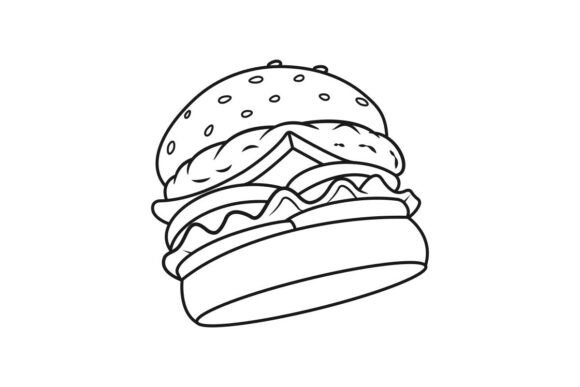
When I opened Burger Line Art Coloring Page, my first thought was: “This lands *exactly* where it needs to—light, confident, and uncluttered.” As a brand designer who’s audited over 200 visual assets for food brands, wellness coaches, and small-batch product creators, I immediately sensed its strategic tone. It’s not trying to be gourmet or minimalist—it’s warm, human, and quietly confident. That matters. A simple and fun illustration featuring a burger designed as a coloring page creates an instant emotional bridge: nostalgia meets modern clarity. The bold outlines and clean shapes signal accessibility without sacrificing polish—ideal for lifestyle content, seasonal promotions (think “Summer Burger Bash” email series), or a playful rebrand refresh for a café, meal kit startup, or food blogger.
Where It Shines in Real Marketing Workflows
I recently used Burger Line Art Coloring Page in a digital campaign for a small-batch spice blend brand launching their “Grill & Go” summer line. We needed visual consistency across Instagram carousels, Pinterest pins, printable recipe cards, and email banners—and this graphic design asset delivered. Its clean negative space allowed us to overlay bold typography and brand colors without visual fatigue. In packaging design, it worked beautifully as a secondary pattern on inner box liners and sticker accents. For social media graphics, it scaled cleanly into Instagram Stories (as a subtle watermark behind text) and Facebook ads (as a hero visual with minimal copy). As a PNG design, it dropped seamlessly into Canva templates; as an SVG design, it retained crispness on web banners and digital ads—even at 3x resolution.
Stronger First Impressions, Smarter Visual Hierarchy
This isn’t just clipart—it’s a functional piece of commercial design. Because the outlines are intentional and the shapes balanced, Burger Line Art Coloring Page supports stronger visual hierarchy in blog graphics and editorial design. When paired with serif fonts for headlines and sans serif body text, it adds warmth without undermining professionalism. It also boosts audience trust: handmade products, online coaches offering “cook-along” challenges, and creative entrepreneurs selling digital products all benefit from visuals that feel personal yet polished. Unlike overly complex illustrations, this one doesn’t compete with your message—it frames it.
Strategic Fit Across Brand Touchpoints
Here’s where Burger Line Art Coloring Page earns its keep:
- Hero graphics & campaign headers — especially for food-related launches, pop-up events, or seasonal email sequences
- Branded templates — ideal for Canva template creators building editable social media kits or content bundles
- Packaging accents & product labels — works as a subtle icon on jar stickers, QR code inserts, or compostable bag seals
- Printable designs — perfect for lead magnets like “5-Minute Burger Coloring Sheets” for food bloggers or nutrition coaches
- Digital product visuals — enhances thumbnails and sales pages for cookbooks, meal planners, or kids’ activity packs
Use With Intention—Not Everywhere
That said, Burger Line Art Coloring Page isn’t universal. Avoid placing it in formal corporate branding (e.g., B2B SaaS pitch decks), dense information layouts (like comparison tables), or text-heavy Facebook ads where clarity is non-negotiable. It loses impact on low-contrast backgrounds (e.g., light gray on white), and its charm dims in ultra-minimalist brands that rely on whitespace and monochrome restraint. On mobile screens under 200px width, details like lettuce texture soften—so test readability early. And never assume automatic commercial license: always verify usage rights before deploying in paid campaigns, client deliverables, or merchandise.
Practical Brand Designer Notes You’ll Actually Use
Before locking it into your brand system, do these five checks:
- Test it against your full color palette — does it sing in your primary brand color? Does it hold up in black-and-white for print or accessibility?
- Drop it into real mockups — try it on a product label, Instagram post, and email banner side-by-side to assess balance and scale
- Preview on mobile — zoom out to 50% in your design tool to simulate how it reads on small screens
- Compare it to competitor visuals — does it stand out without feeling off-brand or gimmicky?
- Pair it with fonts deliberately — it harmonizes with rounded sans serifs (like Poppins), friendly scripts (like Pacifico), and even restrained display fonts—but can clash with tight, high-contrast serifs (like Bodoni) unless carefully spaced
Why This Is More Than Just Another Illustration
In today’s oversaturated feed, attention is currency—and Burger Line Art Coloring Page is a quiet investment in visual consistency and emotional resonance. It’s not flashy, but it’s reliable. It supports small business branding without demanding attention away from your offer. It fits naturally into modern design workflows—from Figma to Canva—and pairs effortlessly with other design assets in a cohesive bundle. Whether you’re a publisher building a themed content calendar, a digital seller curating a creative marketplace collection, or a coach designing a branded challenge, this illustration delivers professional branding value without complexity. It’s proof that sometimes, the strongest marketing visuals aren’t the loudest—they’re the clearest, most intentional ones.